Christmas Light Safety Tips for High Roofs and Ladders
The holiday season is a time for joy, but decorating your home—especially hanging Christmas lights on high roofs—can quickly turn into a risky endeavor if proper safety measures aren’t followed. A few simple Christmas light safety tips and good ladder safety Christmas lights habits can be the difference between a magical display and a trip to urgent care. Here’s your guide to safely illuminating those hard-to-reach rooflines with festive cheer.
Why Roof and Ladder Safety Matters for Christmas Lights
Every year, people are injured falling from ladders or slipping on steep, icy roofs while putting up holiday lights. High roofs, Minnesota winters, and heavy strings of lights are a tough combination.
Taking time to follow basic Christmas light safety tips and focusing on Christmas lights ladder safety keeps you, your home, and your display safe all season.
Plan Ahead Before You Climb
Safety starts with preparation. Before stepping onto a ladder or climbing your roof, take some time to plan your lighting display.
- Measure Your Roofline: Calculate how many lights and extension cords you’ll need to avoid unnecessary trips up and down the ladder.
- Inspect Your Lights: Test all light strands for faulty bulbs and frayed wires before installation. Replace any damaged components.
- Check the Weather: Choose a dry, calm day for your installation. Wind, rain, and icy conditions make high roof work significantly more dangerous.
Use the Right Tools
The right tools and equipment can make a huge difference in both the ease and safety of hanging Christmas lights on high roofs.
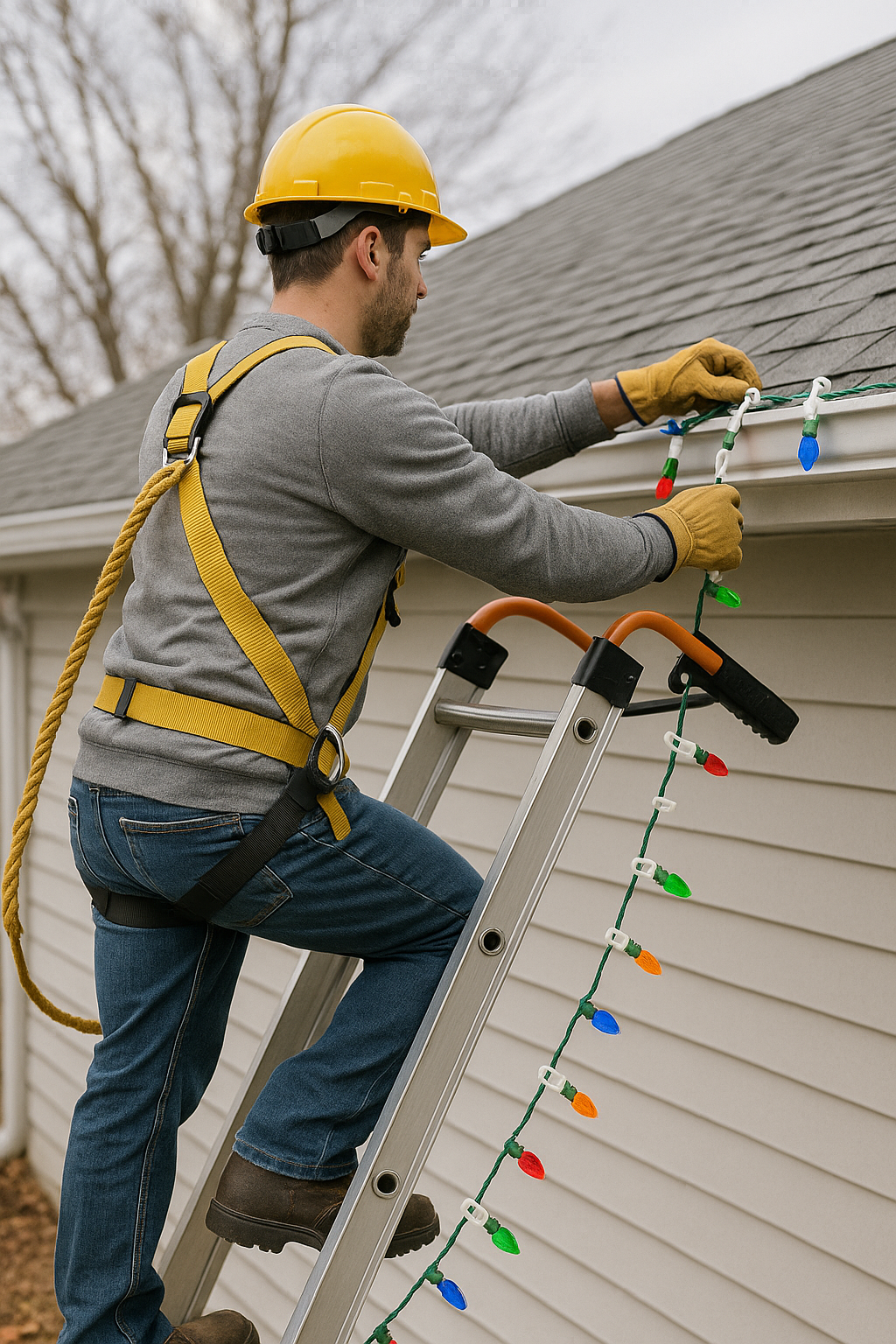
- Ladder: Use a sturdy, non-slip ladder that extends at least 3 feet above your roofline. An extension ladder is ideal for steep or high roofs.
- Ladder Stabilizer: A stabilizer adds balance and prevents your ladder from slipping or damaging gutters.
- Harness and Safety Gear: For very high or steep roofs, invest in a safety harness with a secure anchor point.
- Light Clips: Avoid using nails or staples, which can damage your home and pose an electrical hazard. Opt for plastic light clips that attach safely to gutters or shingles.
- Gloves and Footwear: Wear gloves to protect your hands and slip-resistant shoes for better traction on roofs.
Christmas Lights Ladder Safety: Set Up the Right Way
Most decorating injuries involve ladders, not the lights themselves. That’s why Christmas lights ladder safety is so important:
- Set Up on Solid Ground
Place the ladder on level, firm ground. If the surface is soft or uneven, use a ladder mat or stabilizing base. - Use the 4-to-1 Rule
For every 4 feet of ladder height, the base should be 1 foot away from the wall or roof edge. This gives you a safe climbing angle. - Have a Spotter
Ask a friend or family member to hold the ladder and hand up clips, lights, or tools so you’re not leaning or twisting. - Maintain Three Points of Contact
Always keep two hands and one foot—or two feet and one hand—on the ladder. Don’t carry big armloads of lights; use a tool belt or small bucket instead. - Never Overreach
If you have to lean far to one side, climb down and move the ladder. Overreaching is one of the biggest causes of falls.
Roof Safety Tips While Hanging Christmas Lights
Once you’re actually on the roof, move slowly and carefully:
- Watch Your Footing
Stay on dry, stable areas and avoid loose shingles or icy patches. - Use a Safety Harness When Needed
On steep roofs or upper stories, a properly anchored harness is essential. - Work in Sections
Secure each section of lights before moving on so you’re not juggling tangled strands. - Don’t Overload Gutters
Spread out the weight of your lights and clips so gutters and fascia aren’t strained or pulled loose.
Electrical Christmas Light Safety Tips
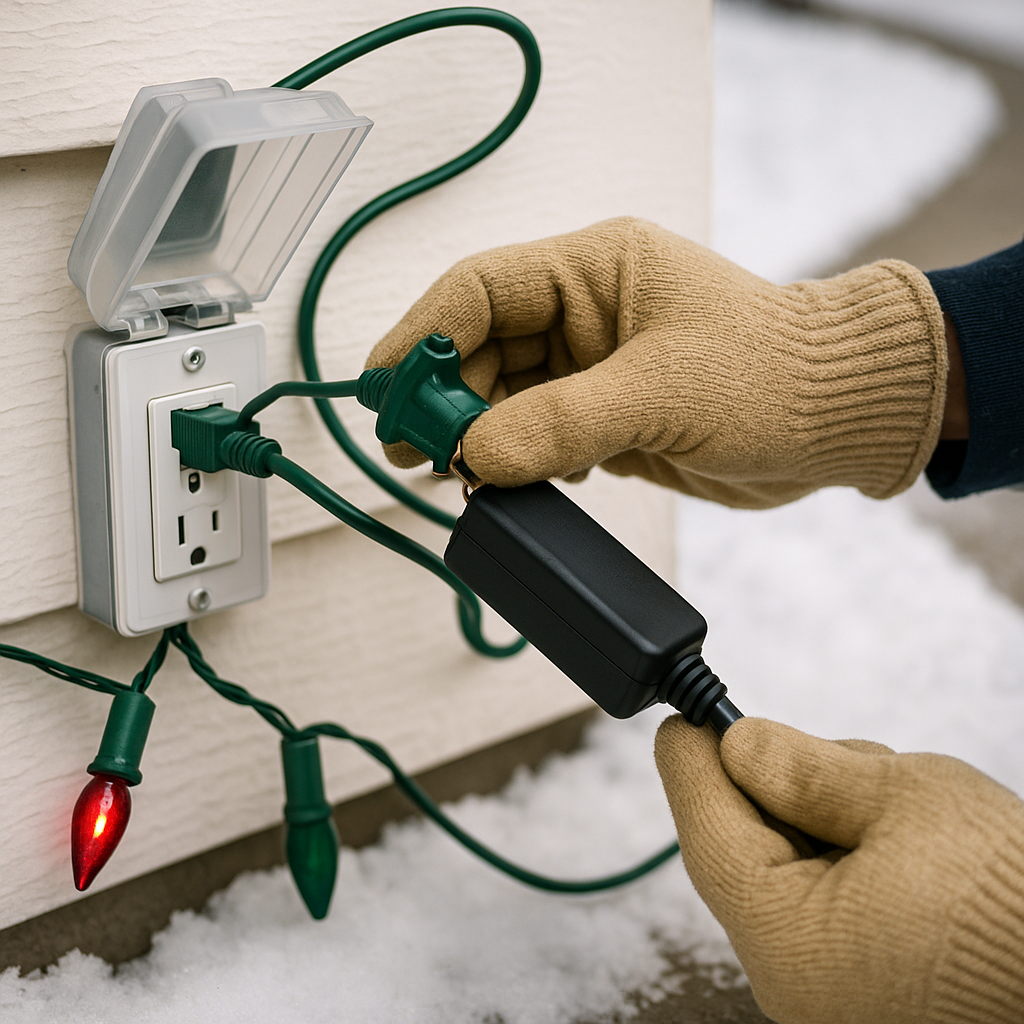
Even a perfect ladder setup won’t protect you from electrical issues. These Christmas light safety tips keep your display safe and reliable:
- Use Outdoor-Rated Lights and Cords
Only use products labeled for outdoor use; they’re designed to handle moisture and cold. - Avoid Overloading Strands
Follow the manufacturer’s guidelines for how many strands can be safely connected end-to-end. - Use GFCI Outlets and Surge Protectors
Plug outdoor lights into GFCI-protected outlets and consider a surge protector for extra safety. - Keep Connections Off the Ground
Elevate plugs and connections to keep them out of snow and standing water. - Secure Cords
Route cords away from walkways, steps, and doors, and secure them so they don’t become tripping hazards.
When to Call the Professionals
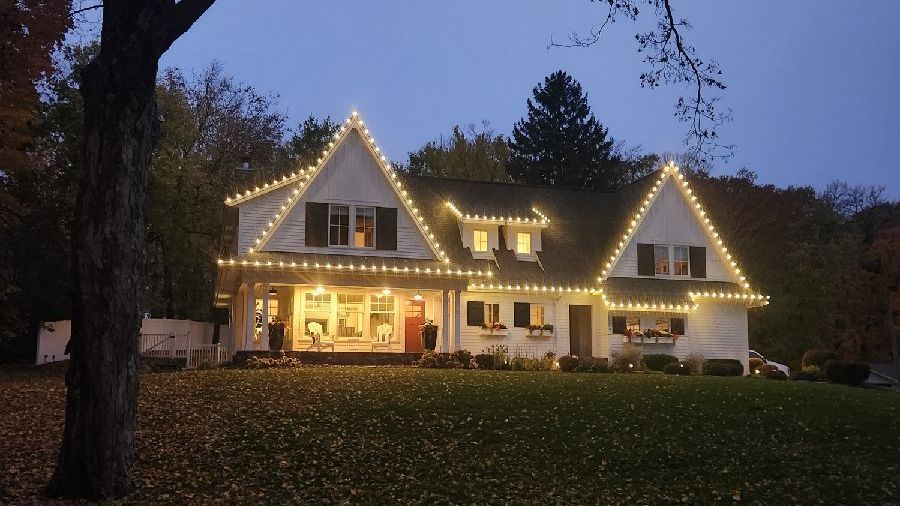
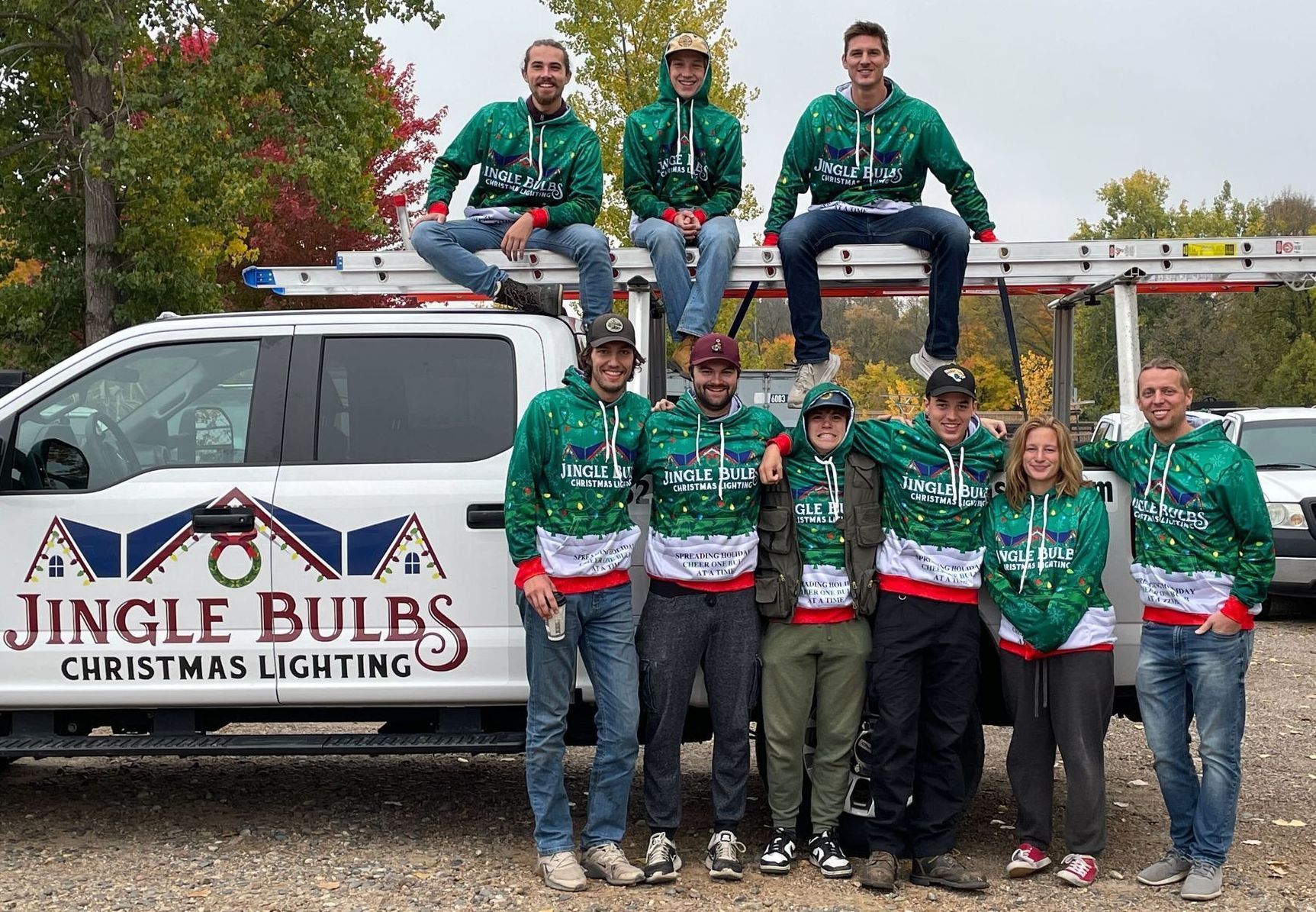
If your roof is particularly high, steep, or difficult to access, it’s best to leave the job to professionals. Jingle Bulbs Christmas Lighting specializes in safely installing holiday lights on all types of homes, even those with the most challenging rooflines. Their team is equipped with the proper tools, training, and experience to deliver a stunning and safe display.
Maintenance During the Season
Once your lights are up, keep an eye on them throughout the season. After heavy winds or snowstorms:
- Inspect your display for loose strands or damaged lights.
- Clear off any debris or snow to prevent additional strain on your lights or gutters.
Regular checks ensure your display stays safe and bright all season long.
Hanging Christmas lights on high roofs can add a magical touch to your holiday décor, but safety should always come first. With proper planning, the right tools, and a commitment to caution, you can create a stunning display without risking injury. For an even safer and stress-free experience, trust professionals like Jingle Bulbs Christmas Lighting to handle the job for you.
Contact Jingle Bulbs Christmas Lighting today to schedule your holiday light installation and enjoy a beautifully lit home without climbing a single ladder.